
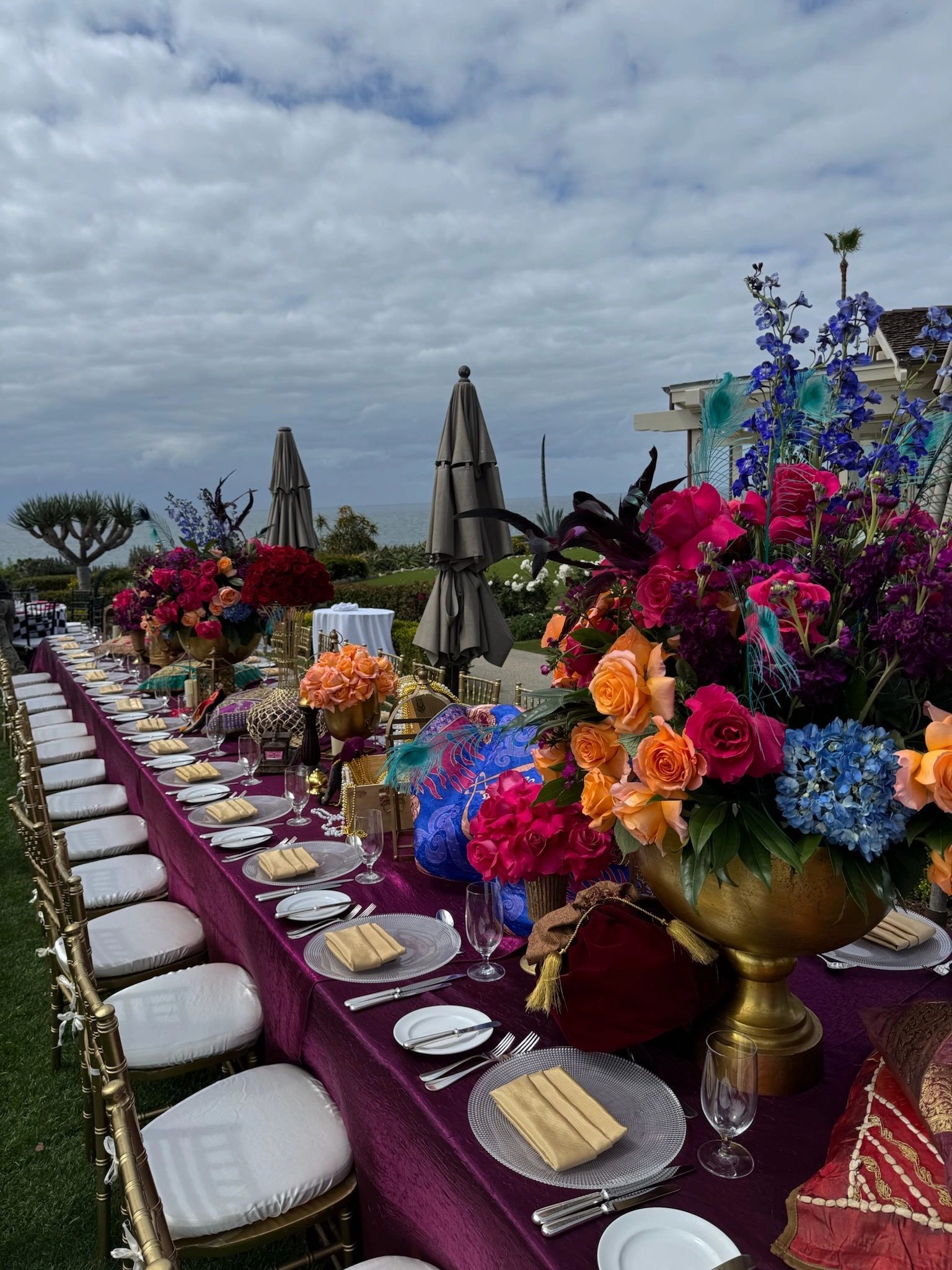
A memorable wedding table is more than a collection of pretty things. It gives your guests a place to gather, talk, share a meal, and feel welcomed. Flowers, linens, and light all play a part, but they need not compete for attention. Begin with the atmosphere you want to create, then let each choice support it.
Choose a feeling before a color palette
Describe your celebration in a few words: perhaps relaxed and coastal, quietly romantic, or modern and warm. Then choose a small palette with a grounding neutral, one or two main colors, and an accent if you want one. A limited palette can still feel layered when you vary tones and textures rather than matching every element exactly.
Consider the existing room or landscape, too. The color of the walls, the view from the tables, and the surrounding greenery will influence the effect. In an Orange County coastal setting, for example, soft natural textures might complement an open view; an inland garden may inspire a different balance. Let the setting inform your choices without feeling obliged to follow a theme.
Give flowers room to be enjoyed
Decide where flowers will have the most impact. A few expressive arrangements may do more for the atmosphere than trying to fill every available surface. Think about the shape of your tables and the way food will be served before settling on centerpiece sizes. Leave space for place settings, glassware, serving dishes, and the small details that matter to you.
Ask your floral designer about arrangements that allow guests to see and speak comfortably across the table. Share your palette and a sense of the textures you love, while leaving room for seasonal substitutions. If the reception is outdoors, discuss sun and wind exposure as well as the timing of setup.
Use linens to connect the details
Linens set the visual foundation. A textured cloth can add softness to a simple arrangement, while a quieter fabric can give more expressive flowers room to stand out. Compare swatches beside your floral inspiration and, if possible, alongside your tableware. Colors can read differently in a sample folder than they do together in your setting.
Consider napkins and the shape and finish of your tables and chairs as part of the same composition. Repetition creates calm: a tone in the napkin might echo a flower, or the warmth of a chair might pick up a detail in the tableware. Aim for a conversation between elements, not an exact match.
Plan for the light your guests will actually see
A table that looks lovely in daylight may feel different after sunset. Ask your venue or a qualified lighting professional what light will be available during dinner and whether additional lighting is permitted or needed. Discuss practical visibility as well as mood, including how guests will read menus and see one another.
If you are considering candles, check the venue's rules before making them part of the design. Where open flames are not allowed, suitable battery-operated alternatives may offer a gentle glow. For outdoor celebrations, consider how changing light and wind could affect the setting.
Make one final, practical edit
Before placing orders, review a sample setting or a simple visual plan with the people responsible for your table design and venue setup. Check the dimensions, quantities, placement, access times, and who will set each element. Remove anything that crowds the table or does not contribute to the feeling you chose. The most intentional tables leave space for the people around them.